
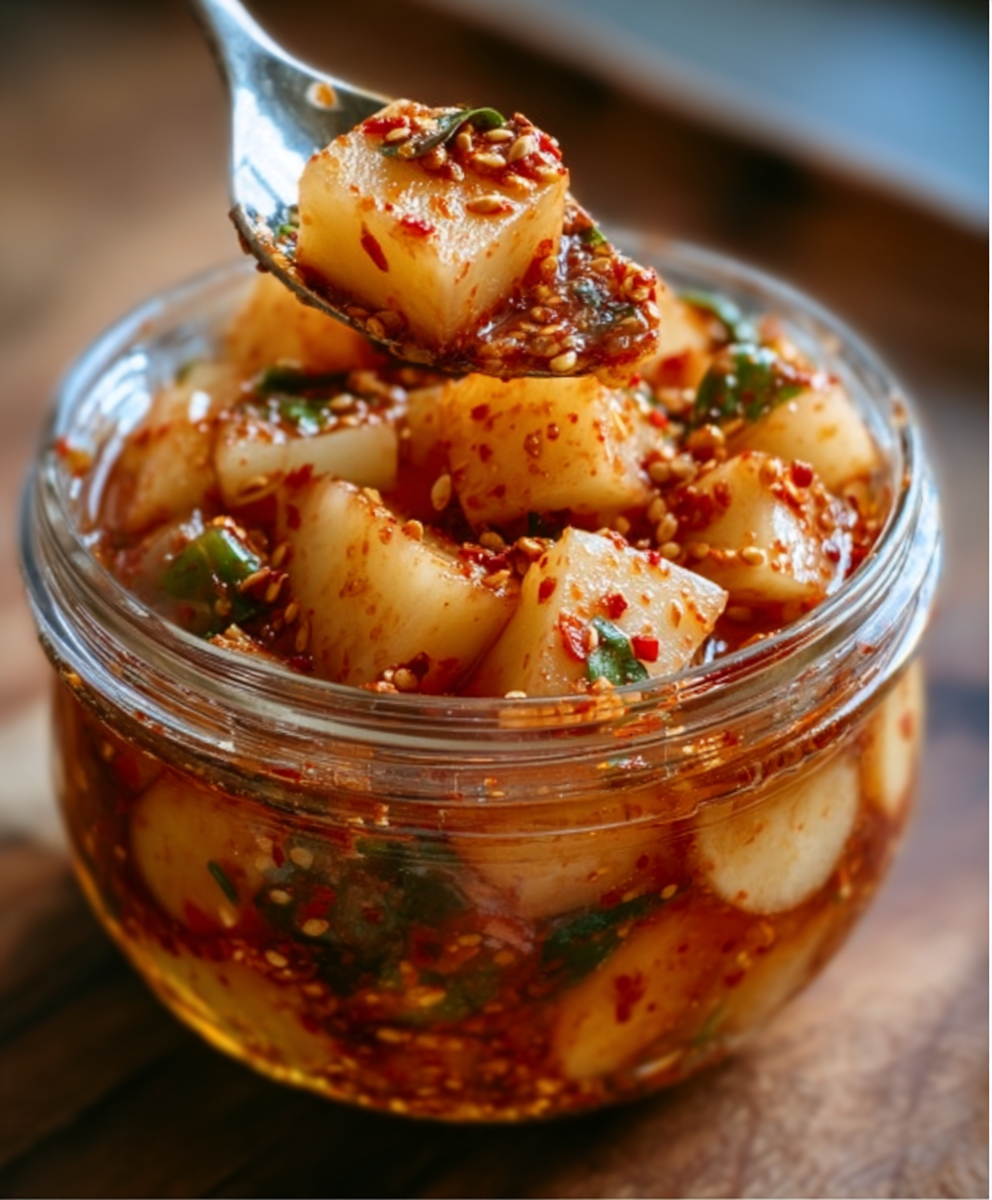
Introduction to Traditional Korean Radish Kimchi (Kkakdugi)
Welcome to the vibrant world of Traditional Korean Radish Kimchi, or Kkakdugi! If you’re looking for a dish that’s not only bursting with flavor but also easy to whip up, you’ve come to the right place. This kimchi is a delightful blend of bold spices and crunchy radish cubes, making it a perfect side for any meal. Whether you’re a busy parent or just someone who loves to impress friends with homemade delights, Kkakdugi is your go-to recipe. Let’s dive into this culinary adventure together!
Why You’ll Love This Traditional Korean Radish Kimchi (Kkakdugi)
This Traditional Korean Radish Kimchi, or Kkakdugi, is a game-changer in the kitchen! It’s incredibly easy to make, requiring minimal prep time. Plus, the fermentation process adds a depth of flavor that’s simply irresistible. You can enjoy it as a refreshing side dish or a zesty topping for rice. Trust me, once you taste that crunchy, spicy goodness, you’ll be hooked!
Ingredients for Traditional Korean Radish Kimchi (Kkakdugi)
Gathering the right ingredients is key to making delicious Traditional Korean Radish Kimchi, or Kkakdugi. Here’s what you’ll need:
- Korean radish (daikon or mu): This is the star of the show! Its crisp texture and mild flavor make it perfect for kimchi.
- Gochugaru (Korean chili flakes): These vibrant red flakes bring the heat and color. Adjust the amount based on your spice preference.
- Garlic: Minced garlic adds a punch of flavor that complements the radish beautifully.
- Ginger: Grated ginger gives a warm, aromatic touch that enhances the overall taste.
- Salt: Essential for drawing out moisture from the radish and kickstarting the fermentation process.
- Sugar: Just a touch of sugar balances the flavors and helps with fermentation.
- Fish sauce: This adds a savory depth. For a vegan option, simply swap it with soy sauce.
- Green onions: Chopped green onions add freshness and a pop of color to the mix.
- Rice flour slurry (optional): This thickens the paste and gives the kimchi a nice body. It’s not necessary, but it’s a great addition!
- Sesame seeds (optional garnish): These add a nutty flavor and a lovely finishing touch.
For exact measurements, check the bottom of the article where you can find everything listed for easy printing. Happy cooking!
How to Make Traditional Korean Radish Kimchi (Kkakdugi)
Now that you have all your ingredients ready, let’s dive into the fun part: making your own Traditional Korean Radish Kimchi, or Kkakdugi! Follow these simple steps, and you’ll be on your way to enjoying this crunchy, spicy delight in no time.
Step 1: Prepare the Radish
Start by cutting the Korean radish into bite-sized cubes. Aim for pieces that are about 1-inch in size. This helps them soak up all that delicious flavor. Once cut, toss the radish cubes with salt. Let them rest for about 30 minutes. This step draws out moisture, making your kimchi crunchier!
Step 2: Rinse and Sweeten
After the radish has rested, rinse it lightly under cold water. This removes excess salt. Drain the radish well, then sprinkle it with sugar. The sugar balances the flavors and enhances the fermentation process. Trust me, it makes a difference!
Step 3: Make the Chili Paste
In a bowl, mix the gochugaru, minced garlic, grated ginger, and fish sauce (or soy sauce for a vegan option). If you’re using the rice flour slurry, add it here too. Stir everything together until you have a thick, vibrant paste. This is where the magic happens, so don’t skip this step!
Step 4: Coat the Radish
Now, it’s time to toss the radish cubes with your chili paste. Make sure every piece is evenly coated. I like to use my hands for this, but you can use a spatula if you prefer. Just be careful; the gochugaru can stain your hands!
Step 5: Add Green Onions
Once the radish is coated, fold in the chopped green onions. They add a fresh crunch and a pop of color to your kimchi. Plus, they bring a lovely oniony flavor that complements the radish perfectly.
Step 6: Pack and Ferment
Finally, pack the kimchi tightly into a clean jar. Press down to remove any air pockets. This helps with fermentation. Leave some space at the top, as the kimchi will expand. Let it ferment at room temperature for 2 to 5 days. The longer you let it sit, the more flavorful it becomes! Once it’s fermented to your liking, pop it in the fridge to slow down the process.
Tips for Success
- Use fresh, firm radishes for the best crunch.
- Adjust the gochugaru to suit your spice level; start small if you’re unsure.
- Keep your utensils and jars clean to prevent unwanted bacteria during fermentation.
- Check your kimchi daily; taste it to find your perfect fermentation point.
- Store in the fridge to prolong freshness and flavor.
Equipment Needed
- Cutting board: A sturdy surface for chopping your radish.
- Sharp knife: Essential for cutting the radish into cubes.
- Mixing bowl: For combining your ingredients and making the chili paste.
- Clean jar: A glass jar for fermenting your kimchi; any airtight container works too.
- Spatula or hands: For mixing and coating the radish with the chili paste.
Variations of Traditional Korean Radish Kimchi (Kkakdugi)
- Spicy Kkakdugi: Add more gochugaru for an extra kick! If you love heat, don’t hold back.
- Vegan Kkakdugi: Substitute fish sauce with soy sauce or a splash of tamari for a gluten-free option.
- Fruity Twist: Incorporate diced apples or pears for a hint of sweetness that balances the spice.
- Herbed Kkakdugi: Mix in fresh herbs like cilantro or mint for a refreshing twist on the classic flavor.
- Pickled Kkakdugi: Add vinegar to the chili paste for a tangy version that’s perfect for those who love pickled flavors.
Serving Suggestions for Traditional Korean Radish Kimchi (Kkakdugi)
- Serve Kkakdugi alongside grilled meats for a refreshing contrast.
- Pair it with steamed rice or noodles to balance the spice.
- Enjoy it as a topping on tacos or sandwiches for a unique twist.
- Garnish with sesame seeds for an extra touch of flavor and presentation.
- Complement with a chilled Korean beer or a light, fruity soju.
FAQs about Traditional Korean Radish Kimchi (Kkakdugi)
As you embark on your journey to make Traditional Korean Radish Kimchi, or Kkakdugi, you might have a few questions. Here are some common queries that can help you along the way:
How long does Kkakdugi last in the fridge?
Once fermented, your Kkakdugi can last for several weeks in the fridge. The flavors will continue to develop, so it’s best enjoyed within a month for optimal taste.
Can I use regular radishes instead of Korean radish?
While Korean radish (daikon or mu) is ideal for Kkakdugi, you can use regular radishes in a pinch. Just keep in mind that the flavor and texture will differ slightly.
What if my kimchi is too salty?
If your Kkakdugi turns out too salty, try rinsing it lightly under cold water before serving. This can help balance the flavors without losing too much of that delicious spice!
Can I make Kkakdugi without fish sauce?
Absolutely! For a vegan version of Traditional Korean Radish Kimchi, simply substitute fish sauce with soy sauce or tamari. It will still be packed with flavor!
How can I tell when my Kkakdugi is ready to eat?
Check your kimchi daily during fermentation. Taste it after a couple of days; it should be tangy and flavorful. Once it reaches your desired taste, pop it in the fridge to slow down fermentation.
Final Thoughts
Making Traditional Korean Radish Kimchi, or Kkakdugi, is more than just a cooking project; it’s a delightful journey into the world of flavors and fermentation. Each bite of that crunchy, spicy goodness brings a smile to my face, reminding me of family gatherings and shared meals. The joy of creating something so vibrant and full of life is truly rewarding. Plus, the satisfaction of serving homemade kimchi to friends and family is unmatched. So, roll up your sleeves, embrace the process, and let the magic of Kkakdugi brighten your kitchen and your heart!
Print
Traditional Korean Radish Kimchi (Kkakdugi) recipe to try today!
- Total Time: 2–5 days (including fermentation)
- Yield: ~1 quart (serves 6–8 as a side)
- Diet: Vegan
Description
Bold, spicy, and beautifully fermented radish cubes with deep chili-garlic flavor and irresistible crunch.
Ingredients
- 1 Korean radish (daikon or mu)
- 1/2 cup gochugaru (Korean chili flakes)
- 5 cloves garlic, minced
- 1 inch ginger, grated
- 2 tablespoons salt
- 1 tablespoon sugar
- 2 tablespoons fish sauce (or soy sauce for vegan)
- 2 green onions, chopped
- 1/4 cup rice flour slurry (optional, for body)
- Sesame seeds (optional garnish)
Instructions
- Cut radish into bite-sized cubes and toss with salt; rest 30 minutes to draw out moisture.
- Rinse lightly, drain well, and sprinkle with sugar.
- Mix gochugaru, garlic, ginger, fish sauce, and optional slurry into a thick paste.
- Toss radish cubes with the chili paste until evenly coated.
- Fold in chopped green onions.
- Pack tightly into a clean jar, pressing down to remove air pockets.
- Ferment at room temperature 2–5 days, then refrigerate to slow fermentation.
Notes
- Fermentation time may vary based on room temperature.
- Adjust the amount of gochugaru to taste for spiciness.
- For a vegan version, substitute fish sauce with soy sauce.
- Prep Time: 25 minutes
- Cook Time: 0 minutes
- Category: Side Dish
- Method: Fermentation
- Cuisine: Korean
Nutrition
- Serving Size: 1/2 cup
- Calories: 30
- Sugar: 1g
- Sodium: 600mg
- Fat: 0g
- Saturated Fat: 0g
- Unsaturated Fat: 0g
- Trans Fat: 0g
- Carbohydrates: 7g
- Fiber: 2g
- Protein: 1g
- Cholesterol: 0mg